Turn methodology, CRM signals, buyer activity, research, and deal intelligence into the actions, artifacts, and updates required to move each opportunity forward.
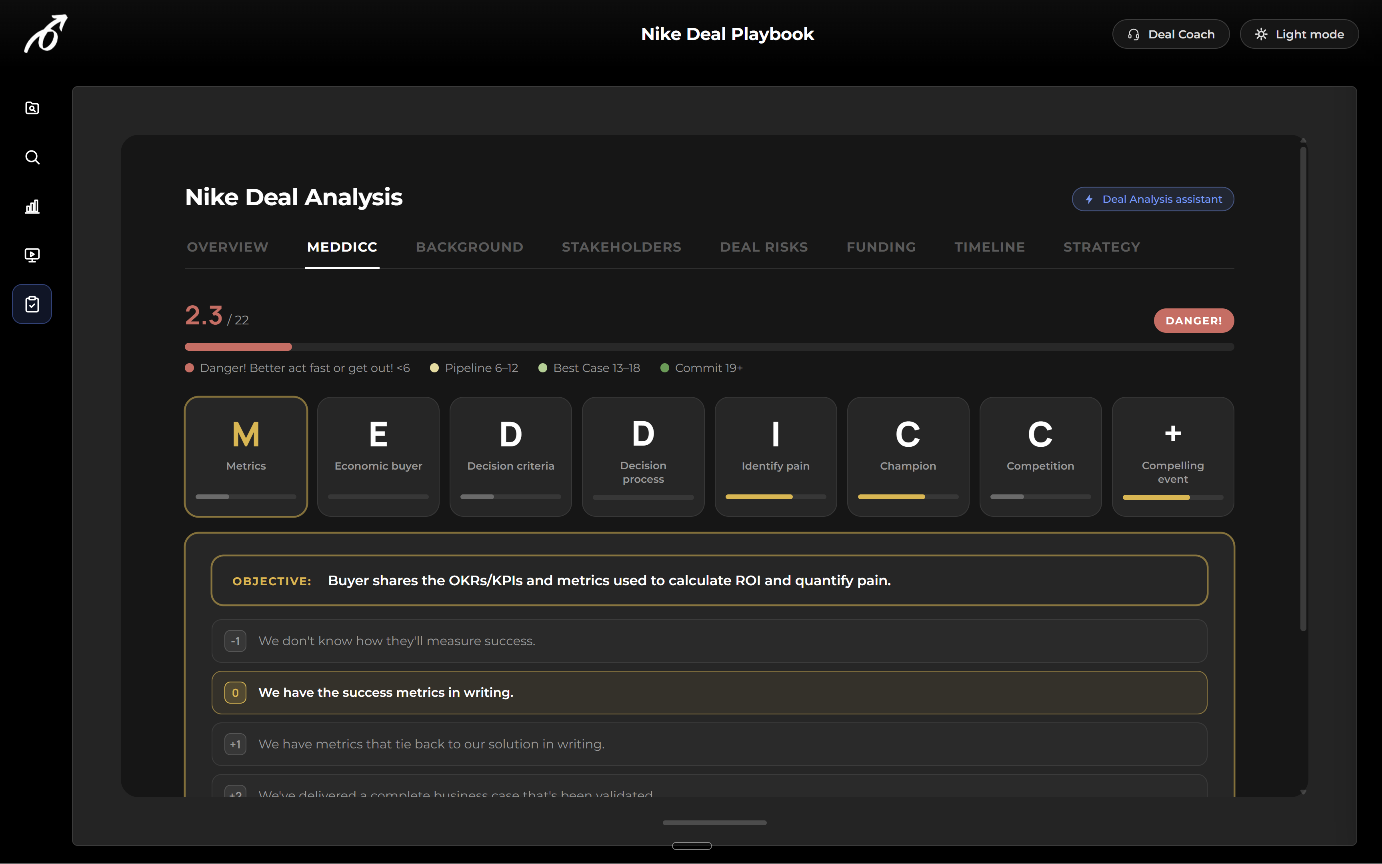
You design the operating system. Reps still have to run it by hand, deal by deal.
Required fields capture an answer, not a qualified opportunity.
Exit criteria describe the work. Nothing guarantees the work happened.
By the time the metric moves, the deal has already slipped.
Move from administering the process to running it — qualification, artifacts and deal context maintained continuously inside each opportunity.
This sits on top of the stack you already run. Salesforce, Gong and your forecasting tools keep their jobs; this is the layer that makes the process actually execute.
The operational work that currently depends on every rep remembering to do it.
Operationalize methodology
Apply qualification and value-selling practice continuously inside each live opportunity.
Improve CRM integrity
Keep opportunity context complete and current from actual deal activity.
Detect execution gaps
Missing activities, artifacts, stakeholders and validation, caught before late stage.
Standardize deal inspection
One evidence-based framework for judging opportunity health.
Close the loop
Feed what happens in real deals back into your execution standards.
More Consistent Execution
The same standard applies whoever is running the deal.
Better Deal Data
Opportunity records reflect what happened, not what was typed.
Earlier Risk Detection
Gaps surface while there is still time to act on them.
Capabilities of the PlaymakerAI deal execution system, combined for this role.
Bring your stages and exit criteria. We'll show you what execution looks like against them.